Losing vision can change the way familiar routines feel. Reading mail, preparing meals, recognizing faces, managing medications, watching television, or moving safely through the home may take more effort than before. For many patients, the hardest part is not only the vision loss itself, but the fear that independence is slipping away.
Low vision does not mean that nothing can be done. It means vision cannot be fully corrected with standard glasses, contact lenses, medication, or surgery. With help from a low vision specialist, many patients can learn new ways to use their remaining sight and continue participating in the activities that matter most.
At Low Vision of Nebraska, Dr. Rob Stamm helps patients living with low vision explore practical options for daily life. His background includes training in low vision care, retinal disease, and prescribing devices that support patients who have been told traditional correction is no longer enough.
What does staying independent with low vision mean?
Staying independent with low vision looks different for every person. For one patient, independence may mean reading again with the right magnifier. For another, it may mean feeling safer while walking through the home, recognizing loved ones more easily, or using adaptive technology to keep up with bills, recipes, hobbies, and appointments.
Low vision care focuses on function. Instead of only asking how small the letters are on an eye chart, an optometrist for low vision asks how vision loss is affecting real tasks. This may include reading, driving goals, cooking, shopping, watching television, using a phone, or navigating familiar spaces.
Key Takeaway
Low vision care does not reverse the underlying eye condition, but it can help patients use remaining vision more effectively, reduce frustration, and regain confidence in daily routines.
What conditions can make independence harder?
Low vision can be caused by several eye and health conditions. Macular degeneration is one of the most common causes among older adults and often affects central vision, making reading, recognizing faces, and seeing fine detail more difficult.
Diabetic retinopathy can cause blurred, distorted, or patchy vision when diabetes damages the blood vessels in the retina. Glaucoma may reduce peripheral vision, which can make mobility and awareness of surroundings more challenging. Other causes may include cataracts, inherited retinal disease, optic nerve damage, stroke-related vision loss, and eye injuries.
Because each condition affects vision differently, low vision support should be personalized. A patient with central vision loss may need different tools than someone with reduced side vision, glare sensitivity, or contrast loss.
How can low vision aids support daily life?
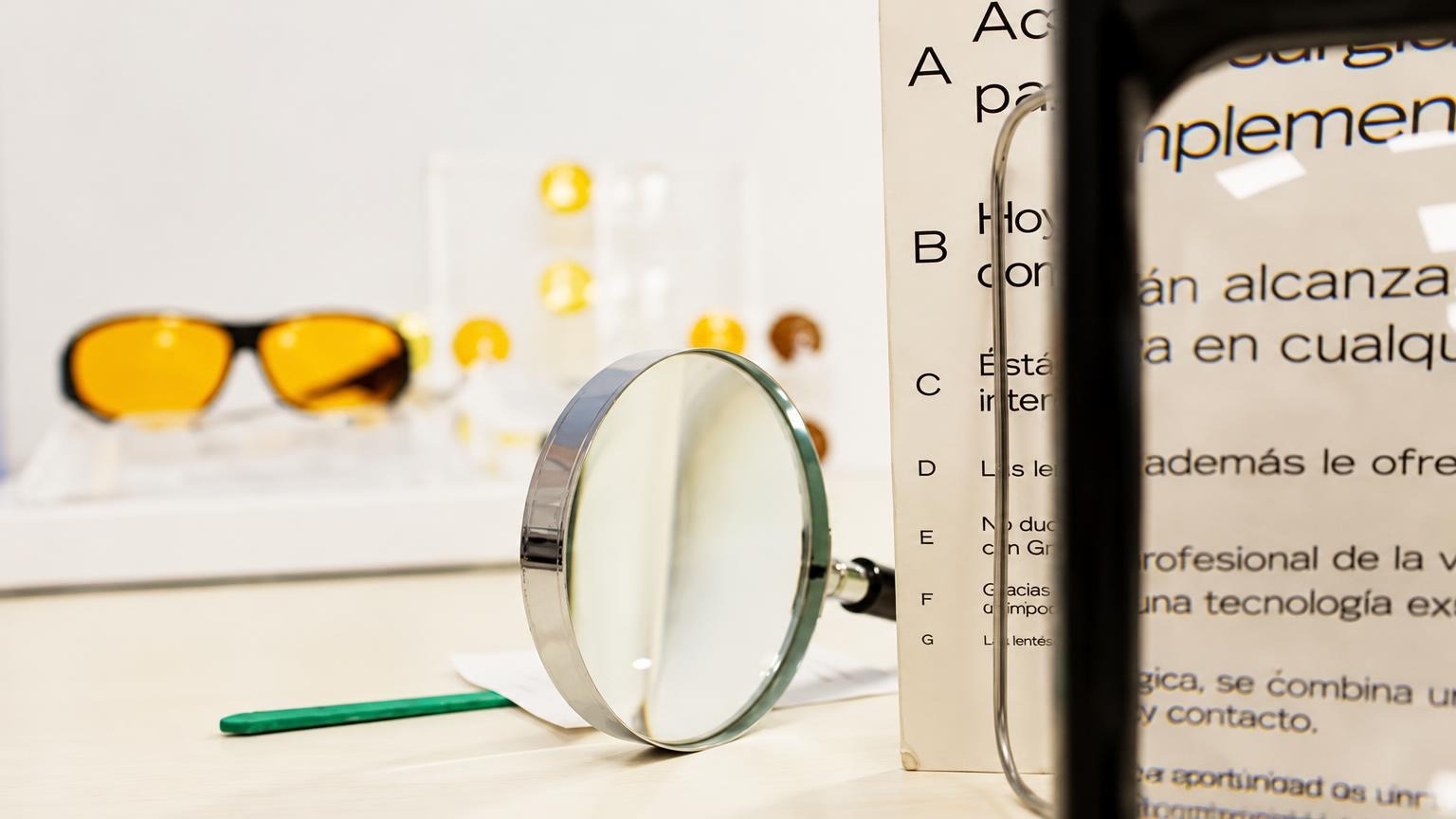
Low vision aids are designed to make remaining sight more useful. Some devices enlarge print, while others improve contrast, reduce glare, or help patients see at a distance. The right tools depend on the patient’s vision, goals, comfort level, and daily routine.
Helpful low vision aids may include:
- Handheld or stand magnifiers for mail, labels, and books
- High-powered reading glasses for close work
- Telescopic glasses for distance viewing, television, or signs
- Electronic magnification systems that enlarge text and images
- Filters or tinted lenses to reduce glare and improve contrast
- Improved lighting for reading, cooking, and hobbies
- Digital tools that enlarge print or provide audio support
Low Vision of Nebraska is committed to helping patients maximize remaining vision and live more fully, and Dr. Rob Stamm has advanced training in prescribing low vision devices.
Why is low vision care important for seniors?
Help for low vision seniors is especially important because vision loss can affect safety, confidence, social connection, and quality of life. When reading becomes difficult or mobility feels uncertain, many people begin giving up activities gradually. They may stop going out as often, rely more heavily on family, or avoid tasks that once felt simple.
A low vision evaluation can help identify which activities are most important to the patient and which tools may support those goals. Even small improvements in reading, contrast, lighting, or distance vision can make daily life feel more manageable.
FAQs: Common Questions About Low Vision
Is low vision the same as blindness?
No. Many people with low vision still have usable sight. Low vision means standard correction cannot fully restore vision, but specialized tools may improve daily function.
Can low vision aids help with macular degeneration?
Yes. Many patients with macular degeneration benefit from magnification, specialized glasses, lighting changes, and contrast support that help with reading and detailed tasks.
Can diabetic retinopathy cause low vision?
Yes. Diabetic retinopathy can damage the retina and lead to blurred, distorted, or missing areas of vision. Low vision care may help patients adapt when vision loss affects daily tasks.
When should someone see a low vision specialist?
A person should consider seeing a low vision specialist when vision loss makes reading, cooking, mobility, hobbies, work, or independent living more difficult, even with regular glasses.
Low Vision Support in McCook, NE
If vision loss is affecting your daily life, you may have more options than you realize. At Low Vision of Nebraska, Dr. Rob Stamm provides low vision services designed to help patients make better use of their remaining sight and stay connected to the routines, people, and activities they value.
Schedule a low vision consultation with Low Vision of Nebraska in McCook, NE, to learn how personalized care and low vision aids may help support independence.
